
2011 Walleye Fishing Forecast
New For 2011
An 18-inch minimum length limit is in effect statewide for walleye. All walleye less than 18 inches must be released unharmed. Exceptions to the statewide regulation include Claytor Lake, the New River above Claytor Lake and Lake Robertson.
Reservoirs
Philpott Reservoir
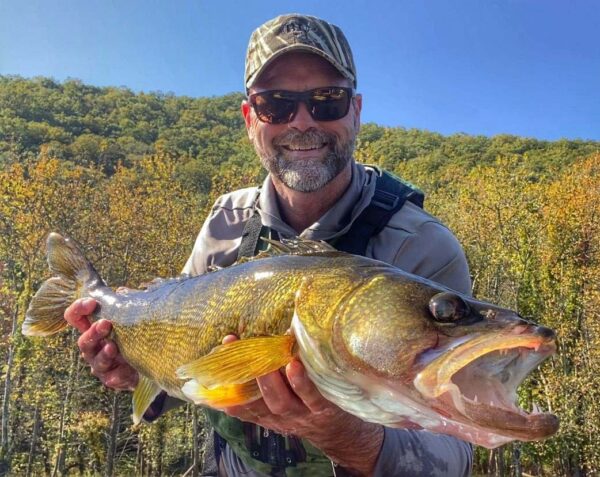
Walleye fishing at Philpott Reservoir should be very good again in 2011 with one of the better walleye populations in Virginia. Fall gill netting in 2010 produced the highest catch rates ever recorded for Philpott with most legal size walleye falling between 18"-20". This fishery does not contain many large fish but does support good numbers. Walleye reach 18 inches at about 3 years of age and most male walleye grow very slowly after reaching this size. Female walleye typically grow well for another few years with some achieving larger sizes.
To improve their chances of success, anglers should spend some time learning techniques that are productive for walleye, and locating areas that are productive. Anglers should also focus on the late May through September period. Top water night fishing is very popular and productive in May and June during the alewife spawn. By late June, walleye start moving into deeper water and are caught on nightcrawler harnesses and plugs trolled in deeper water. As water temperatures increase throughout the summer, walleye continue to move deeper seeking cooler water. Anglers must fish deeper throughout the summer or fish at night to capitalize on this fishery. Catching a few walleye per outing should be considered good and catching a limit of five walleye, a very good trip. Approximately 28% of the legal size walleye are at least 20 inches and about 5% of the population is over 22 inches. Occasionally walleye are caught in the 6-8 pound range.
Biologists will tag walleyes in Philpott again in 2011 as part of a statewide study. A cash reward of 20 dollars is offered for the return of the tag and catch information for walleye tagged since 2009. These tags are located near the fish’s dorsal (top) fin. Anglers can remove the tag by cutting through the monofilament attachment with scissors or a knife. The fish can then be released or harvested (minimum length limits apply). Return the tag and catch information to the address printed on the tag. Catch information includes: date, time and general location of catch, "Was the fish harvested or released?", "Were you fishing for walleyes?", and "Did you catch other walleyes on this fishing trip?"
There are a few walleye still remaining that were tagged in 2002, 2003 and 2006. These fish have abdominal orange tags and the reward for these tags varies from $5-$50. Return the same information mentioned above with all tags collected.
Leesville Reservoir
The 2011 fishing season for walleye at Leesville Reservoir will be challenging. This fishery supports a fair number of larger fish but the overall numbers of walleye are very low compared to other Virginia walleye lakes. Limited walleye available for stocking in recent years has resulted in a modest stocking rate for Leesville Reservoir. As a consequence, the walleye population at Leesville is much lower than desired.
The bulk of the walleye population is in the 18-21 inch size range with an occasional fish in the 5-6 pound range. Walleye at Leesville have good growth rates and typically reach 18 inches between their second and third year. Approximately 35% of the walleye over 18 inches in length are at least 20 inches and about 5% of the population is over 22 inches.
The most productive walleye fishing is typically between Leesville Dam and mile marker 6. Night fishing in May and June with floating or shallow running plugs cast to the shoreline should not be overlooked. Walleye often frequent water less than 2 feet deep during these dark spring and early summer hours. During daylight hours, fish the shoreline contour targeting depths (5-15 ft). Walleye are very light sensitive and prefer dark or shaded habitat. As a consequence, these fish will frequent shallower depths if the water is shaded or stained but will remain deeper during the day if the water is clear. Rock cliffs and steeper shorelines should be the most productive with some coves also holding additional walleye. As water temperatures increase in late spring and throughout the summer, walleye move deeper seeking cooler water and become most active during nighttime hours.
Leesville can be a challenge to due extreme daily water fluctuations but anglers who spend time learning productive walleye angling techniques for Leesville and concentrate on areas and habitat that hold walleye may encounter a number of these elusive fish. Leesville Reservoir experiences very light fishing pressure and can provide solitude for anglers looking to avoid crowds and boating traffic.
South Holston Reservoir
South Holston should provide good walleye fishing in 2011. Sampling conducted in 2009 and 2010 indicated that the walleye population is still in great shape. This reservoir provides year-round fishing opportunities for walleyes. A spring "run" takes place in the South Fork Holston River near the community of Alvarado from late February through April. Fishing generally peaks during mid-March. Most anglers fishing the headwaters area fish at night with floating minnow baits like the number 9 or number 11 Rapala. Some anglers use jigs or jigs tipped with live bait. During April, May and June anglers find walleyes feeding along the shorelines of the lake. Again, shallow running lures fished at night is the preferred presentation. When walleyes move deeper during the summer months, many anglers have success trolling nightcrawler harnesses on leadcore line or bottom bouncers during the daytime. Trollers usually concentrate their efforts at depths between 15 and 25 feet during the summer months. Some anglers also catch walleyes at these depths using jigging spoons. Points and flats are the most popular locations, but any shoreline with fairly consistent depths could produce walleyes. Fall fishing is definitely growing in popularity. The same lures and techniques used in the spring can be successful when the water cools down in September and October. Winter fishing calls for jigging spoons or jigs and live minnows. The winter months provide an interesting opportunity for anglers to fish for walleyes when other fishing opportunities and outdoor activities in general are limited. Very few anglers are taking advantage of the winter walleye fishing opportunities. Our sampling indicates that the walleyes are fairly active in the winter months, particularly the month of February. Since 2008, we have spent a considerable amount of time on South Holston Reservoir during February collecting walleyes for the statewide tagging study. We have collected decent numbers of fish along the shoreline in relatively shallow water (less than 10 feet) the first two weeks of February. Good numbers of walleyes and some really big female walleyes are moving around the reservoir and often are congregated along certain shorelines by mid to late February. These congregations seem to move on a daily basis. A particular bank may hold great numbers of fish one day and have almost no fish the next day. Big females can be found along the lake’s upper shorelines through mid-March. Most of the male walleyes move into the river by early March.
Anglers will catch some walleyes in 2011 that were tagged by biologists in South Holston Reservoir from 2008 to 2010 as part of a statewide study. A cash reward of 20 dollars is still offered for the return of these tags and catch information. Anglers can remove the tag by cutting through the monofilament attachment with scissors or a knife. The fish can then be released or harvested (minimum length limits apply). Return the tag and catch information to the address printed on the tag. Catch information includes: date, time and general location of catch, "Was the fish harvested or released?", "Were you fishing for walleyes?", and "Did you catch other walleyes on this fishing trip?"
Flannagan Reservoir
The walleye population in Flannagan Reservoir has made a nice comeback following the fish kill of 2004. The fish kill combined with poor survival of stocked fingerlings in 2003, 2004 and 2005 greatly reduced walleye numbers for a few years. However, excellent survival of walleye fingerlings stocked each year since 2006 has bolstered the population. There should be good numbers of walleye over 18 inches this year. Survival and growth of recently stocked year classes looks very good based on sampling conducted in the fall of 2010. November gillnet sampling produced the highest catch rate recorded in recent years.
Walleyes moving into the Pound and Cranesnest Rivers during the early spring months provide some exciting fishing opportunities. Following a long and unusually cold winter, the 2010 spring walleye run offered pretty good walleye fishing for the dedicated group of anglers who fish in the Cranesnest River practically every evening during the spring months. Most anglers use floating minnow plugs and start fishing just before dusk. These anglers seldom catch their limit of walleyes, but obviously catch enough to keep their interest peaked. Some really nice fish were landed in 2010. During April, May and June walleyes can also be caught on shallow running plugs fished at night along the shorelines of the reservoir. It is during these months that alewives, the primary forage of Flannagan walleyes, move into shallow water at night to spawn. Trolling with lead core line is the preferred technique after the water temperatures soar in the summer months. Some anglers also catch walleyes fishing with live bait under lights at night.
Small Lakes
Lake Brittle
Lake Brittle continues to be one of the best places in the northern Virginia piedmont to catch a walleye. Anglers targeting walleye report good success at this small impoundment with most fish caught in the 2-3 pound range and the occasional fish up to 5 pounds. Fisheries sampling continues to document good survival of stocked walleye fingerlings and a strong population of walleye up to age-5 reside in Lake Brittle. Recent data from the ongoing tagging study has shown that angler catch and harvest rates for walleye are higher than previously thought and as a result an 18 inch minimum size limit was put into effect during 2009. Angler success seems to be the highest during the late spring and early summer.
Biologists will continue tagging walleyes again in 2011 at Lake Brittle as part of an ongoing tagging study to evaluate angler catch and harvest. A cash reward of 20 dollars is offered for the return of the tag and catch information. Anglers can remove the tag by cutting through the monofilament attachment with a knife or scissors. The fish can then be released or harvested. Return the tag and catch information to the address printed on the tag. Catch information includes: date, general location of catch, "Was the fish harvested or released?", "Were you fishing for walleyes?", and "Did you catch any other walleyes on this fishing trip?"
Lake Orange
Anglers hoping to catch a decent walleye while fishing for multiple species should look no further than Lake Orange. Walleye have been stocked into this northern piedmont impoundment for years, and current management includes annual stockings of walleye fingerlings. Generally, survival of stocked fingerlings is good and the current age structure is comprised of fish up to age-15, with most of the population less than age-8. Walleye growth at Orange is fast to age-4, averaging 20 inches and 3 pounds, but growth slows beyond age-4 with fish seldom reaching 26 inches. Anglers occasionally catch walleye in the 6-8 pound range. Most walleyes are caught during the late spring and early summer by anglers fishing Lake Orange for bass, although a few anglers do specifically fish for walleyes at this location. Anglers should also be aware that an 18 inch minimum size limit was placed on all walleyes caught at Lake Orange during 2009.
Lake Orange was added to the walleye tagging study to evaluate angler catch and harvest in 2010. Biologists will continue tagging walleyes again in 2011 at Lake Orange as part of an ongoing tagging study to evaluate angler catch and harvest. A cash reward of 20 dollars is offered for the return of the tag and catch information. Anglers can remove the tag by cutting through the monofilament attachment with a knife or scissors. The fish can then be released or harvested. Return the tag and catch information to the address printed on the tag. Catch information includes: date, general location of catch, "Was the fish harvested or released?", "Were you fishing for walleyes?", and "Did you catch any other walleyes on this fishing trip?"
Hungry Mother Lake
This 108-acre lake in Southwest Virginia provides anglers with a great opportunity to catch walleyes in a small lake setting. Located in Hungry Mother State Park, the lake is also a great destination for families. The walleye population is increasing steadily. There are good numbers of fish up to about 20 inches, and enough bigger ones to cause anglers to lose some sleep again this year. A few walleyes are caught in late February, but the month of March generally signals the beginning of the walleye fishing season. April, May and June are probably the best three months, and night fishing is generally more productive. Alewives are the primary forage for walleyes in Hungry Mother Lake. During these three months the alewives move into shallow water at night to spawn. The spawning alewives swim in tight circles, creating a swirling noise. Most anglers use artificial lures to imitate the spawning alewives, but live shad, minnows and night crawlers are also effective. After June the walleyes seem to be harder to catch. During July, August and September anglers should concentrate their efforts in water less than 15 feet deep, because oxygen is limited at depths below 15 feet. Live bait will probably produce more strikes than artificial lures during this late summer period. During the day walleyes tend to be close to structure, like submerged trees. At night, or on cloudy days, walleyes move away from structure to feed on suspended schools of alewives.
Biologists will be tagging walleyes in Hungry Mother Lake again in 2011 as part of a statewide study. A cash reward of 20 dollars is offered for the return of the tag and catch information. Anglers can remove the tag by cutting through the monofilament attachment with scissors or a knife. The fish can then be released or harvested. Return the tag and catch information to the address printed on the tag. Catch information includes: date, time and general location of catch, "Was the fish harvested or released?", "Were you fishing for walleyes?", and "Did you catch other walleyes on this fishing trip?"
Lake Robertson
If your goal is to hook into an occasional walleye while focusing on largemouth bass or catfish, this hidden jewel might be what you are looking for. Lake Robertson was stocked with walleye beginning in 1983, with the intention of controlling the growing sunfish population and adding diversity to the lake. It succeeded in both cases. Today, a low density walleye population inhabits this clear impoundment, adding to the robust largemouth bass and channel catfish fishery. Walleye growth, however, is very good. It takes three years for fish to reach the 20-inch minimum limit. One Lake Robertson walleye measured 27 inches and 8 pounds, so trophies can be found. A good time to catch a walleye at Lake Robertson is in March or April, before or after the fish have spawned. Since walleye prefer hard substrate, you can best locate these nocturnal creatures near the dam in the spring.
Little Creek Reservoir
Anglers that fish Little Creek Reservoir should continue to see improved success with the walleye fishery. This 947-acre reservoir in James City County is part of the City of Newport News reservoir system. Public fishing access is provided through the James City County Parks & Recreation department. After several years without any walleye stockings, Little Creek Reservoir is now being stocked with walleyes regularly. The 2010 allocation of 60,500 walleyes fingerlings were stocked at several locations throughout the reservoir.
In 2009, a total of 132 walleyes were tagged at Little Creek Reservoir. Each walleye was tagged with a floy tag to allow for a specific # to be assigned to each fish. This tagging project is a separate study and not associated with the walleye tagging study that is underway on several other waters in the state. There are no monetary rewards for any of the tagged fish from Little Creek Reservoir. Angler assistance in reporting the tag number and size of any caught walleye will assist fisheries biologists in determining growth and survival rates. 2010 fall surveys conducted by DGIF staff collected seven walleyes ranging in size from a 7.5 inch YOY (young of year) to a chunky 19.4 inch walleye. Three of the collected walleyes were tagged fish. These recaptured fish showed great growth rates and appear to be taking advantage of the blueback herring population. The three untagged fish were from the 2008 stocking and ranged in size from 18.6 to 19 inches.
The future looks even brighter for the walleye population with the 2011 stocking request set to hopefully provide an increased stocking rate. The clear water and steep-sided banks will have most anglers trying to catch fish in deep water off of the many points that make up the topography of the reservoir. Boat anglers can only use electric motors. Anglers are encouraged to have at least two batteries to efficiently cover the many creek arms and coves of the reservoir. Anglers are reminded that the new, state-wide minimum size limit for walleye is 18 inches.
Rivers
Upper New River
Walleye fishing in 2011 should be fair on the upper New River from Fries Dam downstream to Allisonia. Crankbaits, jigs and live minnows are working well during the late winter and spring season. Catch rates of walleye from sampling in 2010 were high and this should translate into good fishing catch rates this year. Anglers caught the most walleye in the months of February through April but walleye were caught throughout the year. There is a new walleye size and creel limit in effect on the upper New River starting February 1, 2011. It is a seasonal protective slot limit with a reduced daily creel limit.
From February 1st through May 31st all walleye 19-28 inches caught from below Buck Dam downstream to Claytor Lake Dam must be released unharmed. Anglers fishing this area can creel 2 walleye per day that are less than 19 inches or over 28 inches.
For the remainder of the year, June 1st through January 31st, a 20-inch minimum length limit on walleye, five fish per day creel is in effect for Claytor Lake and the New River above Claytor Lake Dam.
This regulation was established to allow anglers to harvest a few smaller male walleyes (less than 19 inches) or a trophy female walleye (greater than 28 inches) while protecting the best spawning-size walleyes during the spring months.
Biologists will be tagging walleyes again in 2011 as part of the statewide research project. A cash reward of 20 dollars is offered for the return of the tag and catch information. Anglers can remove the tag by cutting through the monofilament attachment with scissors or a knife. The fish can then be released or harvested (minimum length limits apply). Return the tag and catch information to the address printed on the tag. Catch information includes: date, time and general location of catch, "Was the fish harvested or released?", "Were you fishing for walleyes?", and "Did you catch other walleyes on this fishing trip?"
Staunton River
Walleye fishing in the Staunton River should be good in 2011. Anglers should concentrate on the reach from Leesville Dam to Brookneal. During the late winter and early spring, anglers should explore the area immediately below Leesville Dam. During the remainder of the year, walleye are distributed throughout the river, often hanging along the shoreline near fallen trees. Food is abundant in the Staunton River and anglers should try to imitate the abundant shad, perch and sucker populations with crank baits. Night crawlers are always a safe bet for walleye as well. With the abundant forage base, cool water temperatures from Leesville Dam releases, and the quality habitat, anglers will be pleased with both the number of walleye and the sizes of fish.
Clinch River
Walleye are native to the Clinch River, and are available in low densities throughout most of the river. Walleye have been stocked into the Clinch River each year since 2005, and sampling catch rates are notably improved. Consistent stocking should improve fishing opportunities over the next few seasons. For now, anglers should focus their efforts at the times and locations that concentrate walleyes. For example, during March walleyes often congregate for spawning. Most of the walleyes from several miles of river will gather in one or two locations. Spawning walleyes usually congregate in pools just downstream of significant ledges and shoals during daylight hours and then they move into shallow water at night to spawn. Another good location is where a creek enters the river. These types of locations will also be concentrate walleyes during the hot summer months when water temperatures rise and dissolved oxygen levels become a concern. Tributary creeks often have cooler temperatures and the water just downstream from shoals and ledges often has more oxygen as a result of aeration that takes place as water drops over the ledges. Walleyes are almost always more active in low light conditions. Try to fish at dawn and dusk, or even at night if you can fish safely. If you can only fish during the daytime, try to fish when clouds, rain or murky water limits light penetration. Under these conditions, walleye will be more active during the daylight hours.
More Information
For more information, contact the following offices:
| Waterbody | Contact |
|---|---|
| Leesville and Philpott Reservoirs, Staunton River | Forest Office: (434) 525-7522, Extension 103 |
| Lakes Orange and Brittle | Fredericksburg Office: (540) 889-4169 |
| Lake Robertson | Verona Office: (540) 248-9360 |
| Little Creek Reservoir | Charles City Office: (804) 829-6580 |
| Upper New River and Clinch River, South Holston Reservoir, Flannagan Reservoir, Hungry Mother Lake |
Marion Office: (276) 783-4860 |